Traditional pursuits in October – part 1
October 1st is the traditional start of the English Pudding Season. (No, I didn’t know there was such a thing, either!)
September is harvest time and was traditionally followed by the slaughtering of animals and the preservation of their meat. Keeping animals not needed for breeding would require them to be fed throughout the winter, an expense most families would not wish to incur. By October 1st most of the slaughtering would have been completed and the meat salted to preserve it. Women would then start making puddings and pies.
In days of yore, English puddings were savoury. Ingredients included meat, vegetables and spices and sometimes dried fruits were added, to give sweetness.
The word ‘pudding’ derives from the French ‘boudin’ by way of the Latin ‘botellus’. ‘Boudin’ is a French kind of black pudding and ‘botellus’ means small sausage. So, traditional English puddings were essentially sausages! Mediaeval puddings were mainly meat-based. Black pudding is described as a traditional delicacy, though I’m not sure that’s really the right word as black pudding is not ‘dainty’. It is made from animal blood, usually from pigs. It is mixed with fat, onions, cereal and seasoning. White pudding is similar but doesn’t contain blood.
By the 17th century English puddings could be either savoury or sweet.
One mediaeval dish that is still eaten, particularly in North Eastern England, is pease pudding or porridge. It is usually made from yellow split peas and spices and is often cooked with a ham joint. It is similar in texture to houmous (hummus).
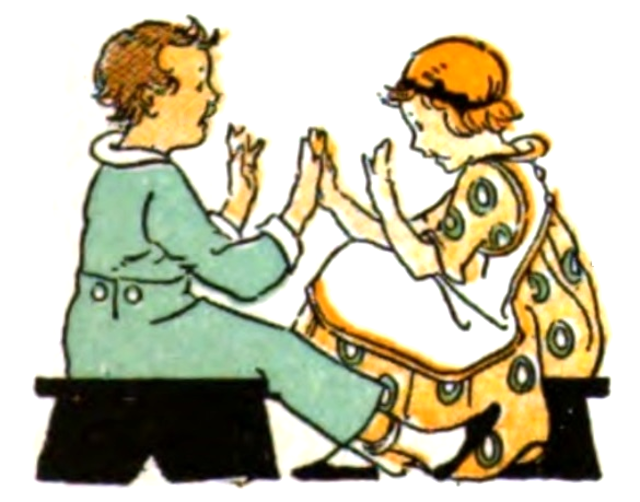
The nursery rhyme is a clapping game between two children, who stand opposite each other. They clap their own hands on the first word, right hands with each other on the second, own hands on the third, left hands with each other, own hands and then both hands with their partner. The sequence is repeated, getting faster with each repetition until one of the pair makes a mistake or they both collapse in a heap of giggles.

Pease pudding
hot
Pease pudding cold
Pease pudding in the pot
Nine days old
Some like it
hot
Some like it cold
Some like it in the pot
Nine days old
It is very entertaining watching children playing clapping games. The nimbleness they display is impressive and it would be a shame if such pastimes lapsed. Among other things, clapping games promote memory skills, improve fine motor control, and encourage concentration.
The following clip shows two girls playing a traditional clapping game.
