Incidental Education
It is always good for the ageing brain to have something new to ponder. My geriatric grey matter usually wanders all over the place, mostly thinking about nothing in particular and everything in general. That is why I welcome books that inform me and focus my attention. Obviously, reference books, which I have in abundance, are inestimable and well-thumbed, but it is incidental information, that arrives by way of fiction, that I embrace.
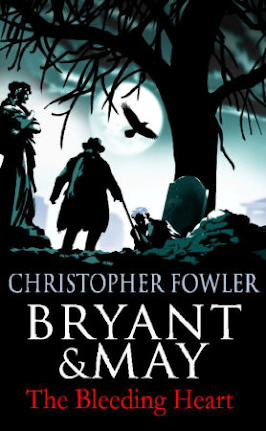
For example, the Bryant and May series, written by Christopher Fowler, is crime fiction, but hidden within is an intricate tapestry of historical London. Alongside classical and occult references, the books are stimulating and satisfying.
Similarly, the Marcus Didius Falco series, by Lindsey Davis,
has broadened my knowledge and understanding of ancient Rome and its Empire. It
is ancient history brought to fresh life and it encourages a desire to learn
more.

A recent discovery for me has been Joy Ellis’s Jackman and Evans detective series. The last one I read,
‘They disappeared’, introduced me to Urban Exploration, a fascinating pastime
and one I would rather read about than undertake.

Personally, the finest authors are those who are able to entertain
and inform and excite further research. I have spoken of fiction writers in
this post, but that last statement holds true for non-fiction writers, too, people
like Max Hastings and James Holland and Joe Simpson.


Education is a life-long enjoyable process. When curiosity no
longer holds sway the spirit begins to decline and turn in on itself.
Self-absorption is interesting only to the self.
