Showing posts with label Lincolnshire. Show all posts

Sunday, 29 September 2024

County flags – Lincolnshire


County flags – Lincolnshire

                                         Image courtesy Wikimedia Commons

The county flag of Lincolnshire was adopted on 24th October, 2005. It was selected from a shortlist of six designs in a competition organised by Lincolnshire Life magazine in conjunction with BBC Radio Lincolnshire. It took place as the result of a campaign to raise the profile of the county. It was supported by local businesses, who thought it would be an effective way to encourage tourism and trade in the county of Lincolnshire. Thousands of local people took part in the vote.

The red cross on the flag is Saint George’s cross, for England. The fleur de lys at its centre is a recognised emblem of the City of Lincoln. The arable nature of Lincolnshire is represented by the yellow edging to the cross and also gives a nod to the nickname of people born and brought up in the county – Yellowbellies. The green on the flag signifies the lush abundance of the Fens, while the blue denotes the wide open skies and coastal waters of the county.

Lincolnshire is a rural county, on the eastern coast. It is known for the wetlands of the Fens, and the Lincolnshire Wolds, which are designated an Area of Outstanding Natural Beauty (AONB)

I enjoyed living in Lincolnshire, though I didn’t enjoy college. I had far more freedom to come and go at home in Kent and was confirmed in my suspicion that communal living was not for me.

Thursday, 16 March 2023

Incidental Education


Incidental Education

It is always good for the ageing brain to have something new to ponder. My geriatric grey matter usually wanders all over the place, mostly thinking about nothing in particular and everything in general. That is why I welcome books that inform me and focus my attention. Obviously, reference books, which I have in abundance, are inestimable and well-thumbed, but it is incidental information, that arrives by way of fiction, that I embrace.

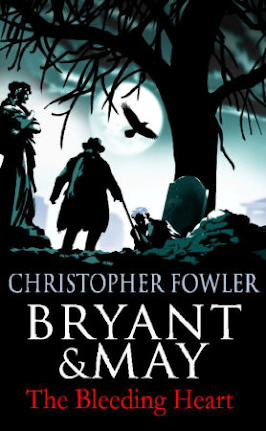
For example, the Bryant and May series, written by Christopher Fowler, is crime fiction, but hidden within is an intricate tapestry of historical London. Alongside classical and occult references, the books are stimulating and satisfying.


Similarly, the Marcus Didius Falco series, by Lindsey Davis, has broadened my knowledge and understanding of ancient Rome and its Empire. It is ancient history brought to fresh life and it encourages a desire to learn more.

A recent discovery for me has been Joy Ellis’s Jackman and Evans detective series.  The last one I read, ‘They disappeared’, introduced me to Urban Exploration, a fascinating pastime and one I would rather read about than undertake.

Personally, the finest authors are those who are able to entertain and inform and excite further research. I have spoken of fiction writers in this post, but that last statement holds true for non-fiction writers, too, people like Max Hastings and James Holland and Joe Simpson.


Education is a life-long enjoyable process. When curiosity no longer holds sway the spirit begins to decline and turn in on itself. Self-absorption is interesting only to the self.

Thursday, 4 July 2013

Slow Down!

Slow Down!
Festival of Britain, 1951
I have always spoken quickly, words tumbling out of my mouth in their rush to get away from me. Even in the classroom I was aware that I was speaking too fast and tried to moderate the speed, without success. Add to that my clipped delivery and fairly quiet voice and you may understand that most people have difficulty hearing what I’m saying. (Naturally, when I was teaching, I ensured that my voice was loud enough to be heard – sometimes very loud. I can project very well when required to do so.)

As an example, this is what my writing looks like these days before I correct it . . . I hace alwysa spoeken qycjkty, words tumblins our of my nmuth in th r rush to gwe awat form me.
Lincolnshire, 1964
Of course, it may just be my poor touch-typing but it is a fact that it is getting progressively worse. It would appear that the less I speak the more my fingers tangle in the keys and produce gobbledegook. When I stopped going out to work (I refused to say I had retired, such vanity! I was not of retirement age and did not wish to be considered OLD) I relished the prospect of not having to talk all day and now I am almost monosyllabic. (You must allow for exaggeration here!)

Now, when required to conduct some sort of social interaction I often fumble for words, desperate to respond intelligibly and not in an ELDERLY fashion and then I see myself as youngsters see me – past it, bless her. It happened the other day when I went to the hospital to have my eyes dealt with (Visual Fields, don’t you know – all those flashing lights, a patch over one eye and then the other and the buzzer in my hand. I’m sure you know the form:  ’Press the buzzer when you see the white light, keep your eye on the orange light in the centre, don’t search for the white light,’ with the result that I frantically press the buzzer, afraid I might miss one of the spots or think back and realise I have missed one. I listen to the buzzers all around me and hear the ophthalmologist explaining patiently to others what they must do and tell myself to concentrate.)

Both eyes having been tested the pleasant young woman (very young . . . how old could she be? Surely not old enough to be doing this job?) asked me, as she had asked every other person, ‘Have you any other appointments today?’ (What did she think? Was I going to have my mental acuity tested or a prosthetic limb fixed?) and that’s when my quick-wittedness came to my aid as I mumbled, ‘No,’ and she said lightly, ‘Oh, another one with no other appointments so you’re free to go now,’ which is when I compounded my elderliness by saying, ‘I’ve got another appointment on July 22nd,’ thus proving that my memory is not quite shot yet. I wanted to stride out of the room in a parody of youthful energy but my bag strap was stuck under the chair and as I fumbled to free it she came to my aid and picked it up for me. I think she was quite surprised at the weight of it. She didn’t exactly grunt as she lifted it, but I had the impression of renewed respect.

As for stepping out smartly, that was never going to happen. For two months I had sciatica which dissipated to be replaced by pain in my hips (one or other, sometimes both), the result of walking badly because of the sciatica *sigh*. After I’ve been sitting for a while I stiffen and it takes a while to unbend and so I hobbled out, pride not quite intact, thus completing the image of a poor old dear.

Who was it said, ‘Would that we could see ourselves as others see us’?* I’d rather not, thank you. It’s enough of a shock to encounter myself in the mirror and too off-putting to realise that a young slip of a lad or lass is looking at me unable, or unwilling, to understand that one day they too will be old(er).

*I cannot let pass a quotation without checking it to make sure I have it correct. (Is this another instance of impending – or ongoing – decrepitude? Or OCD?) In this case, I didn’t . . .  have it correct, that is. I paraphrased the immortal words of Robert Burns, Rabbie to his familiars:-

O, wad some Power the giftie gie us
To see oursels as others see us!
It wad frae monie a blunder free us,
An' foolish notion. 

 Robert Burns, The Complete Poetical Works of Robert Burns
Blandford, 2013

Wednesday, 5 January 2011

ABC Wednesday Y is for Yan, Tan, Tethera

Yan, tan, tethera is a counting rhyme used by shepherds in different parts of England to count sheep. There are dialectic variations but the rhyming pattern remains consistent.

The Lincolshire version for numbers 1 to 20 runs Yan, Tan, Tethera, Pethera, Pimp, Sethera, Lethera, Hovera, Covera, Dik, Yan-a-dik, Tan-a-dik, Tethera-dik, Pethera-dik, Bumfit, Yan-a-bumfit, Tan-a-bumfit, Tethera-bumfit, Pethera-bumfit, Figgot.  It’s pleasing to feel these words roll off the tongue and good to know that English dialects and accents have not been completely homogenised.


You can read more about the origins and differences here.

I wonder how the shepherds involved in the following clip counted their many sheep?

Thank You to the Youthful Denise Nesbitt and her energetic team as they Yomp through the alphabet to host this weekly meme. Please click here to see more Ys.

Thursday, 26 February 2009

The Adventures of Frodo the Faller (3)

Frodo at 6 months old

Until he was nearly three Frodo had led an uneventful life. The biggest change he had experienced was moving from his Lincolnshire home to Berkshire at the age of five months. The two older Dalmatians grumbled as a matter of form but soon Dominie was playing with him and Buddy was sniffing him surreptitiously – they had accepted him.
We had been wondering how he would react to our cats as the only felines he had seen hitherto had been at a distance in the cattery at his old kennels. Our two elderly blue Burmese were both now rather stiff and Pansy was going blind. Singleton's vision had always been compromised as she was cross-eyed – not uncommon in Oriental cats. They had always lived with dogs in the house and knew they were the superior beings and need not trouble themselves over this callow spotted upstart. We introduced them carefully and Frodo was fascinated by them. He sniffed and licked and they tolerated his attentions. This was our first indication of his enormous capacity for gentleness. When Pansy died, he and Singleton spent a long time sniffing about the house searching for her in her old haunts. Our cats had always been indoor cats, not having any fear of people or dogs, though we feared for them. Air rifles can be just as deadly as cars and we saw no reason to expose them to danger. A year after Pansy's death Singleton passed away and Frodo was miserable.

Our eldest daughter visited with her two dogs, Jake the Wonder Rescue dog and Tia the Labrador. Frodo saw how the long-term residents reacted, greeting the visitors like old friends, and followed suit. He was delighted to have playmates. Walking in the forest with the five dogs was an interesting affair. Jake was a very obedient dog – it had been beaten into him by his previous owners – until he was off the lead and running free. When he saw another dog he would rush forward to meet it like a long-lost friend, deaf to all calls to come back. Most times his exuberance was not rebuffed. Dominie, though big and looking fearsome, ambled up agreeably to other dogs, greeting those she knew with her chirruping, warbling cry of welcome. Buddy was more formal, the sort of dog who if he had been a human would have raised his hat and gruffly remarked on the fineness of the day. Tia, still very young, was always ready to play but Frodo was a different prospect altogether. He mistrusted, distrusted, disliked on sight any other dog that dared to come within twenty yards of him – or us. Suddenly our gentle boy was protecting his tribe. If the strange dog read the signs correctly and retreated Frodo was appeased. We soon learnt to hold him close when unknown canines refused to believe that their friendly overtures were being rejected and insisted on trying to sniff his rear end. Dogs can spin! He made a lot of unpleasant noise but would not have acted on it – 'all mouth and no trousers' as the saying has it. Nonetheless it was sufficient to cause the adrenaline to flow, human and canine.
Back at home he was the perfect gentleman once more apart from food. Like many of his breed he was a practised thief and lost no opportunity to supplement his rations with some of ours. Failing that, bird seed scattered on the grass proved agreeable though, judging by the end results, he didn't derive much sustenance from it.

Then came the day of the first Falling, of which more anon.

Dominie (facing) and Frodo playing, Wildmoor Heath, 2006