Showing posts with label dogs. Show all posts

Friday, 7 November 2025

Dog food


Dog food


Through the generations of dogs we’ve had the joy of living with, feeding them has been an ongoing topic for thought and discussion.

I realise this is a First World issue, and am only too aware that many people in this world have not enough to feed themselves and their families. That doesn’t mean that we, more fortunate, should not pay as much attention to what we feed our animals as we do to our own diet.

Our first dog was Whisky, our rehomed three-year-old Labrador. The first meal we gave her was lights. Lights are offal, mainly lungs, heart, stomach (tripe) and other bits and pieces that butchers can extract from a carcase and that might not otherwise be commercially viable. These days, for the nose-to-tail cooks, everything is on the table, or at least in the cooking pot.

She loved her meal, but we did not appreciate the digestive disturbances it caused, so after that she had tinned food, which she inhaled at great speed.

Through the years, we tried dried food, wet food, and raw food. At one time, for a few years, frozen raw chicken, turkey necks, raw bones, and tripe were delivered regularly, and we had a dedicated freezer for it, known as the dog freezer. They really enjoyed it and looked tremendous on it, but there was always something of a question mark over whether they were getting the right proportions of protein, vitamins, and so forth. Raw bones, too, though greatly enjoyed, could be a problem. They might splinter and could not be left in the garden for wildlife to infect with bacteria.

Eventually, the supplier could no longer supply in the quantities we wanted – he was selling to kennels, and our order was quite meagre by comparison. So ended the evenings bagging up frozen meat, to our secret relief. Then we went to dried food.

We didn’t want food that was full of fillers and additives – junk food for dogs - so consulted a site – https://allaboutdogfood.co.uk – a comprehensive and boggling site about many of the commercial dog foods available, and discovered one that seemed good.  We have just discovered that the company providing it, formerly Canadian, has been sold to China, and the ingredients have been tweaked. The dogs are not turning their noses up at it, but we are unhappy not knowing what ingredients are now being used. It’s increasingly difficult to escape the clutches of China, but at least we can still source our own food, and that of our animals.

We found a German company, www.gentledogfood.co.uk and were sent some free samples to try out, to see if the dogs liked them. They are Labradors! They like everything, so it was hardly a rigorous test. They are not at all discriminating in their tastes and wolfed down the samples, and looked around for more. We shall see how they fare on their new diet.

In common with doctors, vets are not given much teaching on the value of good nutrition. Medical students receive fewer than twenty-five hours, often significantly less during their years of training. Veterinary students have about twenty hours.

Thus, it is up to us to research, and refine our diets according to our health, taste, and purses. 


Monday, 15 September 2025

Dogs and puppies


Dogs and puppies

Roxy with her ball, Gilbert waiting.

Roxy and Gilbert met a puppy the other day, a yellow Labrador called Max, thirteen weeks old, and very new to the experience of walking in the Great Outdoors. Well brought-up puppies know that they should be submissive to their elders and so they roll onto their backs, exposing the most vulnerable part of their anatomies to the seniors. Frequently, an inadvertent release of a small amount of puppy pee will occur, to further placate the adults.

When the older dogs sniff the puppy, it will squirm with delight, sometimes squeaking. Some dogs remain submissive all their lives. Our senior Jack Russell, Biddy, had an endearing habit of submitting to people in her ‘pack’ all her life.

Roxy is never happier than when she is carrying a ball, and if she can manage to fit two in her mouth, she is even more delighted. She will not relinquish her prize to another dog, only to a human. While Gilbert may sometimes be distracted from the task of retrieval, Roxy is fully engaged and always knows where a flung ball has landed, often pointing it out to Gilbert.

However, when she met Max, she dropped her ball and allowed him to play with it. Well-bred, properly-socialised adult dogs recognise and understand the needs of puppies. We have been fortunate to have had a number of puppies, and it is heart-warming to see an adult dog gently playing with a young puppy.

Gus playing with puppy Bertie.

To the inexperienced it may look and sound dangerous. There is a lot of play growling and mouthing, huge adult jaws enveloping tiny snouts, the puppy being allowed liberties no adult dog could enjoy.

Frodo playing with puppy Jenna.

Should the puppy become too boisterous, the adult will discipline it, firmly and so quickly that a human may miss the reprimand. Nonetheless, just as humans need a break and a rest from the insistent demands of toddlers, so should dogs be respected and the puppy removed to a safe place for a nap after a period of play.

Bertie sleeping with his big friend, Gus.
Young puppies miss the warmth and security of their litter-mates. Adult dogs don’t often sleep together, but will tolerate a puppy snuggling up to them.

Puppy Gilbert with Roxy and Herschel on his first night in his new home.

Friday, 23 May 2025

Why do dogs yawn?


Why do dogs yawn?

This morning I noticed both Roxy and Gilbert yawning before they went out for their walk. They had been dressed in their collars and were waiting to leave, not taking their eyes off Barry, alert to every movement.

I know that dogs sometimes yawn to alleviate stress, so if a dog yawns when a small child is fussing around it, it might be a good idea to intervene. Small humans don’t understand dog signals and dogs can only communicate in non-linguistic ways. Because of this, it is never a good idea to leave young children alone with dogs of any size. A dog disciplines its puppies by biting and shaking, but puppies have protective fur, not delicate skin, and will not be harmed. Humans have no such protection and can and will be severely damaged.

I’ve never been bitten in anger, but once was caught by Frodo’s teeth when he was unaware during a seizure. It hurt – a lot – and it bruised badly. He would have been mortified, my Velcro dog.

I looked up other reasons for canine yawning. Tiredness can cause it, but my dogs were anticipating an enjoyable outing. Dogs may yawn to calm themselves or each other, or to indicate submission and that they are not presenting a threat. Roxy and Gilbert know each other very well and do not have to compete for their position in the pack. In any case, they are working Labradors, bred to cooperate with people, and other dogs.

Dogs may also yawn in an attempt to regulate their body temperature, in much the same way as panting. They can also show contentment through yawning when they are being caressed. Sometimes, they will yawn in response to their people yawning. 

None of these causes fitted the situation, so it was clear that they were yawning because they were excited. Now, a few hours later, they are relaxed and sleeping, Roxy spread out in a dog bed and Gilbert keeping my feet warm. I don’t think he will ever grow out of that endearing puppy habit of seeking refuge next to me. 

                 Emerging from the pond, each with their own ball!

Thursday, 1 May 2025

Chicken soup


Chicken soup

                                        Image courtesy Wikimedia Commons
I roasted a chicken last night. This was excellent news for the dogs and cats, and their noses were atwitch all the while it was cooking.

We enjoyed the chicken with a variety of vegetables and small roast potatoes.

Tonight, slices of meat will be carved and cut to cook with pasta in a tasty sauce. Tomorrow, more chicken will join lettuce, cucumber, blueberries, avocado, strawberries, olives, watercress, rocket, and spinach in a satisfying salad. The following day, chicken and salad sandwiches will be on the menu.

Finally, the carcase and any remaining meat will be transformed by the pressure cooker into a delicious broth. After several hours, the bones will be soft and easy to crush.

Once it is cool, the bones will be mashed into a thick soup, but this is not for human consumption. I don’t like chicken soup – it repeats on me, which is most unpleasant. (Apparently this is called ‘rumination syndrome’ – mine is mild!) The soup is principally for the dogs, with a little for the cats. It is a treat we make for them two or three times a month, as a change from their usual fare.

They are very happy dogs when they realise they are having a special treat. We give it to them for their breakfast as there is still a great deal of liquid in the soup. The dogs need the hours during the day to deal with the consequential expansion of their guts and the possibility of having to go outside more frequently than usual.

Wednesday, 21 August 2024

Dung, manure, poo


Dung, manure, poo

Image courtesy Wikimedia Commons

It was a remark from Gail that Nobby thinks poo is yummy that made me think.

Years ago, I had read that dogs would eat horse dung from horses fed on grass but not that of horses fed on pellets or concentrates.

However, I would discourage dogs from eating anything they may find on the ground and ‘Leave it!’ is taught from a very young age. This applies to babies and toddlers, too, though a sharp command is likely to reduce little humans to tears. ðŸ˜‰

More seriously, eating horse manure can be dangerous to dogs. Like most domestic animals, horses are wormed at regular intervals, and dung may contain some of the chemicals, like Ivermectin, for instance, which can be toxic to dogs. The ten or more symptoms of such poisoning include dilated pupils, vomiting, tremors, disorientation and difficulty breathing. Some breeds, like Collies, Shetland sheepdogs, Pomeranians and Australian shepherd dogs. are more susceptible, because of a gene mutation.

Ivermectin is found in many worming compounds and is used for farm animals like cattle, sheep, goats and pigs, to treat or prevent lung and intestinal worms.

If a dog is an inveterate consumer of poo, there may be something missing in its diet.

Saturday, 11 May 2024


Reincarnation 1

This is a slight reworking of an old post.


If you consider yourself to be of a delicate disposition you may not wish to read on. However, if you have ever have had intimate dealings with any kind of mammal you will understand the rationale for this post. (I'm sure rationale is far too grand a word for this but I like it . . . )

Through the years of bearing babies and rearing toddlers, followed by decades of teaching young children, while at the same time breeding cats (and mice, gerbils and guinea pigs) and keeping company with a variety of dogs, I have come to realise that ordure has played a significant role in my life. 

It was not something I had ever considered when I was growing up. My sister's babies were neat and clean and cuddly. I realise now that she was very careful to spare me the truth and only encouraged me to change wet nappies. Fifteen years older than me, she was always protective.

The first days of a baby's life open a new mother's eyes – and nose – to a different way of life. Controlling the urge to throw up over her first-born and overcoming the desire to turn away and plead for someone else to take over, she learns the delicate art of cleaning and making comfortable the small helpless being she so rapturously conceived nine months earlier. The rosy glow of imagining a sweet-smelling baby dressed in adorable clothes gurgling happily into the beatifically smiling face of a relaxed and beautiful mother disappears like a hapless, misplaced snowflake in August. 

The mirage is replaced by the reality of a baby that excretes at least twice what he ingests and 'possets' (that's the polite term for 'sicks up') several times a day and night over his hands, his several daily changes of attire, his bed, the furry toy bought on the day of his birth and any unfortunate adult in the vicinity, usually his exhausted, sleep-deprived, tearful mother.

Matters improve of course as the baby grows into toddlerhood. It's always a good idea to greet your child soon after she wakes and not agree with your spouse that it's lovely when she amuses herself while you enjoy a lie-in and consider the possibility of a sibling or two for her. 

Undoubtedly, she is entertaining herself, undressing, removing her nappy, spreading the contents over herself, the bedding and every other thing within reach (no point in hoping the nappy will be just wet). Having finished that task, she has set about deconstructing the cot. It is a little disconcerting when you enter your precious offspring's room to wonder where she can possibly have got to until movement under the mattress beneath the base gives you a clue.

When the little tot plays in the garden, it's quite useful to have a dog about the place which can be blamed for influencing the child to defaecate on the grass. More experienced matrons snort derisively as they explain that all infants do this and follow that information with a knowing and slightly malicious, 'Just you wait . . . '

Sure enough, worse will follow. At least when nappies are still being worn everything that leaves the tiny body is more or less contained. Training pants are the next important stage, but it seems that all your infant is trained to do is to treat them as a portable potty. Potties are wonderful toys, headwear being a favourite deployment – not so good after having been used for their original purpose, though.

Having finally learnt what to do and where, there is a tiresome period when your little person must visit every convenience in every building you pass. Possibly he is searching for the gold standard in lavatories/loos/toilets.

I've been told that the way to teach a boy to aim straight is to put a ping pong ball in the lavatory pan and encourage him to hit it with his golden shower. I have not been told what should happen thereafter. Do they remain in situ for evermore? The mind boggles. Are parents expected to carry a supply of these white spheres?

Cats and dogs present different challenges. House cats that use litter trays are relatively easy. A scoop removes the soiled litter. Fastidious creatures that they are, they help their humans to maintain high standards of hygiene, for, if dissatisfied, they will make their own arrangements and you may be sure it will be somewhere you would not choose. Cats that have the freedom of the world may often choose a spot that pleases them but not the gardening neighbours with whom you once were on friendly terms.

Dogs can be trained to use a particular patch of the garden, but the excrement remains where deposited until removed by someone. In our family this job is known as 'de-lumping the garden' and when we had children living at home they could be persuaded occasionally to undertake this task. At other times I did it. Now they are grown and flown but we still have dogs and their leavings must be cleared away. It has fallen to me to take on this duty full-time because, as Barry says, 'You're so good at it.' Flatterer!

Thus, after so many years of shovelling s*it I know that, if I were to be reincarnated I would return as a Chinese Night Soil Collector. It is said that every third person in the world is Chinese – and I was my parents' third child. Can't wait!

More irreverent thoughts on reincarnation will follow . . .

Friday, 22 March 2024

The dog’s whiskers


The dog’s whiskers


This shows muzzle and chin whiskers. The muzzle whiskers are not as luxuriant as a cat's. Modelling them is the late Cariadd.

There is a similar phrase to the cat’s whiskers referencing a part of the dog’s anatomy. It has the same meaning but is somewhat redundant, since dogs not required for breeding are usually neutered, so the expression is meaningless. If you are unaware of the phrase, please ask.😊

Dogs’ whiskers serve much the same purpose as those of cats. In addition to eyebrows and muzzle whiskers, dogs also have whiskers on their chins and cheeks.


Cheek and under chin whiskers, as worn by the late Bertie

The muzzle whiskers are not symmetrically placed like a cat’s and do not grow in proportion to the size of the dog. This is fortunate since, although a chihuahua would have quite short whiskers, a Pyrenean Mountain dog’s whiskers would be long and strong enough to slice its owner’s legs. I exaggerate, of course, but only slightly. Dogs’ whiskers are very coarse.

The cheek whiskers are few in number and are used in the same way as the muzzle and chin whiskers, enabling the dog to understand its environment. The eyebrow whiskers serve to protect the dog’s eyes, acting as a warning that something is in the immediate vicinity.

                            Eyebrows, modelled by the late Bertie

 Although a dog is perhaps less acutely dependent on its whiskers, it is still rather unfeeling to trim its muzzle whiskers. It will affect the dog’s confidence. I believe it is sometimes done to ‘enhance’ the dog’s appearance, probably for the dreaded show ring.

Wednesday, 14 February 2024

Fed up


Fed up


It’s a funny expression, fed up. At first sight or sound it seems to imply ‘an ample sufficiency’ as my father used to say – replete, satisfied, sated, satiated, or, more prosaically, stuffed, full to bursting, glutted.

My application of ‘fed up’ has no relation to appetite or food – it describes my state of mind. I am fed up, distressed, depressed, pessimistic, unable to see the silver lining in the black cloud. It will pass, I know that, but I’m no company for anyone. Well, that’s just as well, since the only person who has to put up with me is my long-suffering husband, the source to whom I inevitably turn for understanding and support.

Unlike so many, as I understand it, I have no ‘supportive network of friends’ with whom to share my woes. No hope for me, then, since all ‘advice’ insists that everyone needs ‘a social network.’ Not me. Like my mother, I do not relish constant company. I used to worry, particularly after my father died, that she had ‘no friends’. She didn’t need them – she was self-sufficient, with many interests. Her friends were from her youth and life as a wife and mother, and those years passed as readily as children grow and move on. She had, I believe, a rich, interior life that sustained her.

My father used to say that he had few enemies and fewer friends and he was quite a sociable chap! He and my mother were a tight unit – he would have climbed up to get the top brick of the chimney, had she wanted it.

Whatever has brought on this current state of ‘Woe is me’ is of no interest to anyone who has survived this monologue thus far. It will be resolved, or not, and life will continue, perhaps in slightly altered form – well, definitely in another form – until something more gripping happens.

Thank goodness for a loving husband and a bevy of uncomplicated cats and dogs. They don’t ask questions or demand answers – and I include Barry in that. Why can’t people be more like dogs (and cats)?

Wednesday, 27 September 2023

28,000


28,000

"Thank heavens we've got a navy". 

Less than three months before the start of the First World War, on 28th July, 1914, the popular perception of Great Britain’s ability to defend itself against invasion was neatly summed up in this ‘Punch’ cartoon by Leonard Raven-Hill (1867-1942)

‘Punch or The London Charivari’ was a weekly British magazine established in 1841. Its content was humorous and satirical. It was published for 150 years, closing in 1992. Four years later it was revived, but finally closed for good in 2002.

Great Britain had no conscription (state-ordered enlistment to a national, usually military service) until 1916, two years after the commencement of war, while all the other belligerents had conscription from the start. Thus, Great Britain was always under strength and had great difficulty replacing casualties. By the end of the war the land force numbered just over 2 million. However, nearly 5½ million served in the British Expeditionary Force (BEF) in total, of whom around 880,000 perished. Thousands of others suffered life-altering injuries.

The British Army had 28,000 veterinary staff serving in France alone. There were huge animal hospitals to care for sick animals which had often been damaged due to neglect and overwork as much as injury.

Pack mules carrying ammunition

Two million horses, mules and donkeys were used during the First World War In addition to carrying cavalry troops, they moved heavy artillery, transported stores and ammunition and drew ambulances. War dogs were used as messenger dogs and to carry medical supplies and water to injured soldiers in no-man’s land. Pigeons were also used to carry military messages.

Tuesday, 15 August 2023

Yawning


Yawning

There has been relatively little research carried out on the subject of yawning, but it is known that humans yawn about twenty times a day and also that babies in the womb yawn from about 11 weeks’ gestation. Tiredness and boredom are cited as common causes of yawning. (Surely unborn babies aren’t bored? ‘I’m fed up hanging around in here. There’s nothing to do or see. There must be more to life than this.')

A yawn is an involuntary reflex, involving an intake of breath through the mouth and a swift exhalation. In addition to yawning when weary or bored, conversations about yawning can cause participants to yawn. Simply reading the word ‘yawn’ triggers the reflex.

Yawning is contagious, perhaps even more so than smiling, but children are not affected by contagious yawning before the age of four. It is difficult to resist the urge to yawn when others are doing so. Yawns aren’t always silent, either. They are frequently accompanied by sighs or verbalisations like, ‘Oh, dear me’ or perhaps inarticulate grunts or groans. Stretching often plays a part, too.

Gallup, in the journal ‘Evolutionary Psychology’, presented the hypothesis, in 2007, that yawning regulates brain temperature. Taking a lot of air into the lungs through yawning cools the blood that flows to the brain and improves the ability to concentrate.

In 2014, researchers looked at how outdoor temperatures affected the frequency of yawning. When it’s hot, people yawn more. When the temperature drops yawning is less frequent. When it reaches 37° C (98.6°F) which is the average body temperature, yawning is no longer effective in cooling the brain.

However, the hypothesis, though popular, is not proven. For example, it cannot account for mouth-gaping or yawning in cold-blooded animals.

Many animals yawn. Contagious yawning is thought to be an evolutionary behaviour, particularly in pack animals, to induce attention within the group and alertness to danger. The theory is that if an individual yawns, it is indicating to the rest that it is sleepy and therefore less vigilant. The yawn spreads, increasing the overall watchfulness and safety of the pack.

Human yawns are contagious to dogs, but it is not certain that cats are similarly affected.

Saturday, 12 August 2023

Frequently heard


Frequently heard

Gilbert gazes

Our companionable pets like to accompany us at all times. Where we go, so go they. Going to the loo? We’ll come, too. Having a shower? We’ll show you the way. Bedtime? Up the wooden hill to Bedfordshire we all go.

One of the favourite places for them to join us is the kitchen, the heart of the house, where interesting things happen and titbits may be available, especially for good dogs. If something very tasty and possibly fish or cheese-related is being prepared, Jellicoe is at the head of the queue. He has the advantage of the dogs because he can – and does – leap onto the worktop, ready with teeth and talons to help himself to what is NOT on offer to him.

Jellicoe - butter wouldn't melt in his mouth

Hence he finds himself enticed into the conservatory from where he watches through the internal patio door in disbelief that once again he has been fooled into entering a temporary, though extremely comfortable, prison. Loud miaous and scrabbling, if not falling on deaf ears, elicit no reprieve until all preparations have been completed and the repast has been safely stowed in fridge, freezer, cooker or stomach, depending on the stage of preparedness. Then is he released, to caress and purr and otherwise express his delight at being allowed to rejoin the family.

Herschel is a cat of a different cast. He is not as greedy – or desperate – as his brother and does not push forward to steal whatever he can hook with his claws. When Jellicoe is incarcerated, Herschel enjoys a transitory respite from his sibling, who, though smaller and lighter, nonetheless bullies him, swiping him as he passes on his innocent passage elsewhere. It must be said, though, that occasionally the claw is on the other paw, resulting in a feline boxing match as each brother tries to gain the ascendant. The sharp order, ‘Stop squabbling!’ usually halts them in their tracks.

Herschel walks sedately - no food in the offing 

Meanwhile, the dogs sit to attention, closely watching every movement, helping to tidy away morsels that drop to the floor, though some things are sniffed and rejected. Raw onion is not appreciated, but carrot, cucumber, blueberries, tomatoes and most savoury ingredients are gratefully consumed.

Roxy wonders if it's worth her while to move

Sometimes, though, the situation becomes untenable and then the kitchen has to be cleared of all four-footed chums. It is not possible to move quickly when furry obstacles present themselves at every turn and the frequent cry of ‘Mind away’ is heard with increasing desperation. This utterance is a contraction of ‘Mind out of the way’, with an implied ‘please’, naturally. As with all friends, our cats and dogs deserve courtesy and respect.

‘Mind away’ is probably one of the most commonly heard expressions in our house.     


Tuesday, 31 March 2020

Talking, again


Talking to myself, again . . .

I have spent large chunks of time with small and larger children, my own and my own’s own and my own’s owns’ own. A constant barrage of ‘Why?’ and ‘No’ from earliest toddlerdom is followed by years of ‘How do you spell . . . ?’ and ‘What does . . . mean?’ and Where’s . . . ?’ interspersed with my homilies on subjects ranging from the inadvisability of wearing four-inch heels and bare legs in the middle of a cold snap to the wisdom or otherwise of sailing in a Force 9 gale.

There have always been animals around as well, mingling with children of various ages and sizes so of course they must be included in conversations. I reassure the birds as I set out their food and ask the fish if all is well in their watery world. There used to be frogs but they have disappeared, possibly having fallen prey to the rats, which in turn fell prey to Barry’s air rifle and, latterly, the cats. However, we still have newts, though we don’t often see them. The plants and trees are given encouragement and I marvel at the bees and congratulate them on their pollen-collecting skills. I even talk to spiders to ask them to please keep their distance. The dogs and cats are always with us and both of us talk to them all the time, probably more than we talk to each other.
There is little wonder then that I talk all the time.

Our children are grown and flown and when they visit everyone talks at once and no-one listens. The dogs and cats listen intently until they have been fed, watered or exercised, then they sleep. I know Barry hears me but often doesn’t listen (or register) for he inhabits another planet entirely so usually my words fall on deaf ears, or at least ears that are selectively deaf.

I can never understand people who say, ‘I didn’t know I’d lost my voice because I hadn’t seen anyone to talk to.’ I would know instantly and then ask myself why I was whispering.

Sadly, I don’t talk now, so much as mutter, as I complain about whatever or whoever has upset me. I am becoming – am already – a GOW. When did the muttering take over from the talking? I can’t put a precise date on it though it may have coincided with Barry retiring from work and spending more time at home. He always has at least three projects on the go at any one time and each activity requires a different set of tools/instruments which must be left out, ‘So I know where they are for the next time I need them.’ The ‘next time’ may be some days, or even weeks, away and meantime the stuff remains in place to gather dust and join the animals in the obstacle course that is ever-present, ever-shifting in my home.


Thursday, 26 March 2020

Covid-19


Life in the time of Covid-19 and other things

Being part of the ‘vulnerable’ cohort, we have had to give in and ‘self-isolate’, much to our children’s relief.  Delivery drivers are being punctilious in their manner of conveying items to us.

At present, all is bonhomie and I really cannot complain. We go out in the early evening to walk our four dogs. It’s quieter then and because we drive to the woods we do not risk breathing on others or being breathed upon. Susannah lives close to us and calls by every day to see if we need anything. She keeps her distance and we are becoming accustomed to shouted conversations that the whole neighbourhood can enjoy, though, to be sure, they are fairly banal. Frankie stands by, looking a little bemused. His routine has been severely affected, as school has closed for him and all his activities have been suspended. Susannah says the local shop is empty of many things but full of people ignoring the oft-repeated mantra to maintain a 2-metre distance from others. Why? Some people appear to be treating the current lockdown as an impromptu holiday. In some instances, police have dispersed gatherings of more than two people.

Gillian, our eldest daughter, told us of an incident in sleepy Blandford, when police were called to a supermarket to arrest a man who had punched another man because he wanted his block of cheese! Dear me, whatever happened to self-control?
I am enjoying the peace and quiet. It’s never horrendously noisy here but currently we are free of over-flying helicopters and other aircraft, apart from a very occasional airliner. Is it my imagination or are the birds singing more joyously than usual? They are certainly very busy, meeting and mating, nesting and brooding and keeping Herschel and Jellicoe entertained. Their brother, Isambard, died very suddenly last October. Barry had been confined to bed with pneumonia and Isambard had been keeping him company and developed a respiratory disease that killed him in 24 hours, despite the best endeavours of our lovely vets. Very sad. However, he left a little of his soul behind in his brothers, who have both become much more attentive and demonstrative. Jellicoe had also been very ill with pancreatitis and we have found that nursing sick animals seems to make them more affectionate.
The last few days have been glorious, sunny and bright. As spring matures, Nature continues to awaken and dress herself in fresh green and flowers. I saw my first butterfly yesterday. It was yellow, perhaps a Clouded yellow. I’ve just discovered that a yellow butterfly symbolises hope and guidance, and was the symbol of the soul in early Christianity. We certainly need plenty of hope and forbearance at present.

To occupy the hours, I am practising the piano, attempting to improve my playing – long way to go there! – doing jigsaws and tapestry, reading, writing, and trying to remember how to crochet. Crochet is not like riding a bicycle – once you fall off the hook it’s not so easy to get back on!

We are only in the first week of lockdown – I think some folks are going to get mighty tired of it long before the initial three weeks are over. I do feel sorry for teenagers and also glad I haven’t any to contend with. Someone suggested that the divorce rate would increase and/or there would be a ‘baby boom’, the resulting infants possibly becoming known as ‘Coronalists’.


Wednesday, 25 September 2013

Sunday, 25 August 2013

fibonacci or doggerel by any other name . . .

Image by Dr. René Hoffmann, courtesy of Wikimedia Commons 

The challenge from The Imaginary Garden with Real Toads is to write a poem in the Fibonacci form - 1, 1, 2, 3, 5, 8. It appealed to me this rainy Sunday morning and so I over-egged the pudding, so to speak, and produced three poor examples, all reversing the sequence. The first is inspired by the Nautilus image and yes, I know it's not a mollusc, but that's the first thing that came to mind! 

Snail
Shell
Empty
Abandoned
Once mollusc’s retreat
Cast aside for eternity
Unless another entity
Chances upon it
Fancies it
Moves in
Lives
There.

The second deals with the Ashes test matches in which two nations, England and Australia, play a series of five matches to decide the destination of the Ashes, a tiny urn containing the ashes of two cricket balls. 
Dawn
Drear
Summer
Grey clouds loom
No cricket today
The Ashes have been decided
Though England’s batsmen derided
For playing poorly
But they won.
Lucky
Some
Say.


The third effort refers to our house full of dogs, with our daughter's three Labradors, spending their summer holidays. 

What?
How
Many
Dogs are there
Staying in your house this summer?
Six Labradors, one Dalmatian
Three dogs will go home next Tuesday
Leaving just the four
Who live here
Always
With
Us.


Friday, 23 August 2013

Fun in the Forest

'Let me help you'
Buster doesn't need any help but Bertie is quite possessive over his AquaKong.
Sometimes Buster helps his brother Bertie!
An old(er) lady flanked by two young chaps.
Tia is accompanied by Bertie and Buster
Flotilla.
All eyes on the Kong . . . well, most of them. Frodo is not a retriever, except of biscuits.
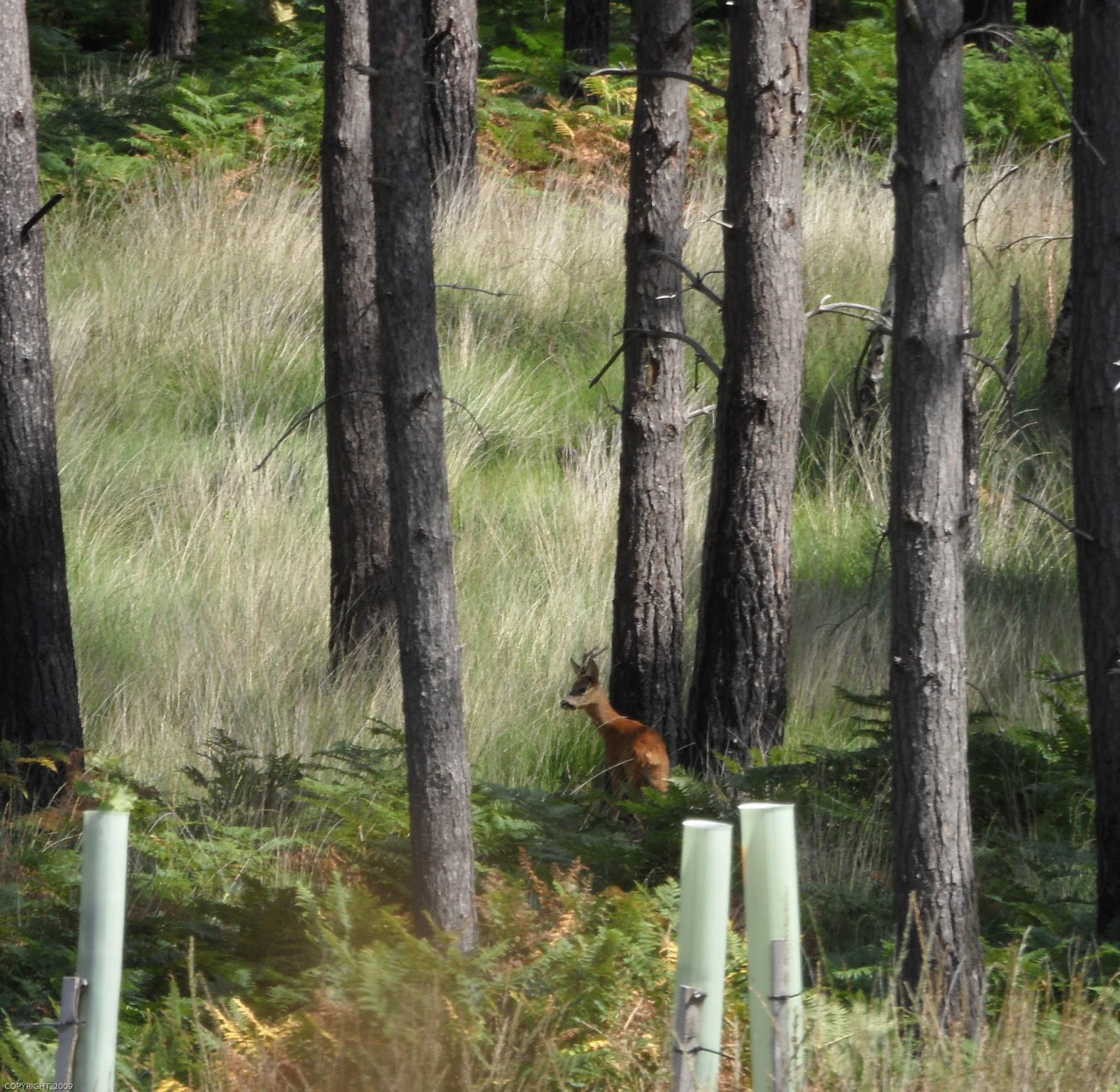
Dear deer!
Up periscope . . . 
. . . when the signal is stationary we are informed that Jenna has 'treed a quarry'. . .
. . . as if!!
A cooling dip for Frodo . . .
. . . and a gentle swim for Foxy, always hoping for (but not receiving) biscuits.
Kersplash!
Can you see me? I can see you!
Tug of war . . . Bertie always wins.
At one of the 'new' ponds.
Left to right: Frodo, Bertie, Buster, Tia, Janice, Foxy, Jenna, Gus
Buster sits and waits for the Kong to be thrown.

Thursday, 6 December 2012

Dogs driving in New Zealand


As a way of showing people how intelligent rescue dogs can be a New Zealand charity has taught dogs to drive and filmed them.

I hope you can all see it - it's amazing!