
A to Zchallenge 2023 – I is for . . .
My
theme for this challenge is Nature in all much of her wonderful
diversity. My posts will reflect the fact that I am resident in the south of
England.
All
photographs in this post are the property of the writer.
I is for Ilex (holly)

Ilex ‘Golden King’ is an evergreen tree with variegated spiny leaves of green and bright gold. Occasionally it produces all gold leaves.

It is one of the best variegated holly varieties and will thrive in shade, although the leaf colour is better in full sun.


the local residents a chance to feast.

A casual observer can mistake redwings for thrushes, but the orange-red patch below each wing and creamy stripe above the eye distinguishes them from our native thrushes.

Redwings migrate during night hours from Iceland, Russia, the Faroes and Scandinavia.
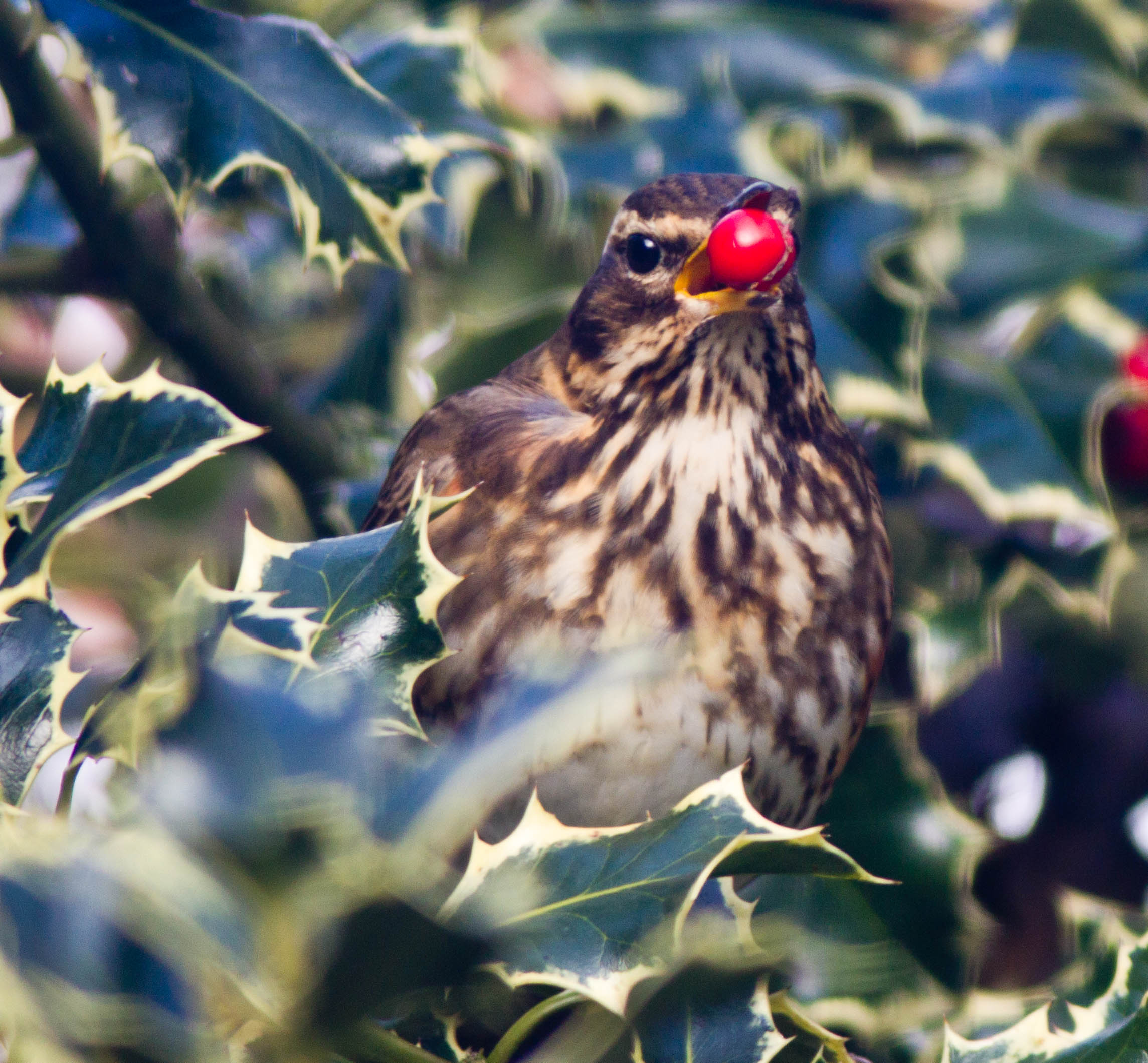


There is a small resident breeding population of between 50 and 100 pairs in the Scottish highlands.
Ichneumon wasp

One sunny October day we noticed an insect we’d never seen before, so we photographed it and proceeded to try and identify it. It was about 1” (2.5 cms) long and we discovered that it was an Ichneumon wasp.

It is widespread in the UK and is seen from April to November in a variety of habitats from hedges and woods to parks and gardens. The female uses her long ovipositor, which looks just like a stinger, to lay eggs in other insects and spiders. When the eggs hatch, the larvae feed on the host, eventually killing it.
This little wasp seeks shelter in hollow trees or under rocks, or anywhere that gives protection from threats and also allows them easy access to food. The one we saw was making use of brickwork near our front door.
It is a parasitic wasp and more than 20,000 species have been identified worldwide, mostly in temperate climates. It is closely related to bees and ants but, unlike them, lives a solitary life of about ten months.
As a parasitic predator it feeds on other insects and their larvae. It uses its long proboscis to reach the internal organs of organisms. It also has strong mandibles, which it uses to pierce the outer carapaces of its victims. It may also feed on pollen, nectar and aphid secretions.
After mating, the male dies and the female spends several weeks laying hundreds of eggs. Thereafter, she also dies.

It sounds exhausting!
