Showing posts with label Easter Sunday. Show all posts

Sunday, 7 April 2024

A week ago


A week ago – how time flies!

A week ago today, Sunday, it was Easter Sunday and we had been invited to lunch with Susannah and James, along with some friends of theirs.

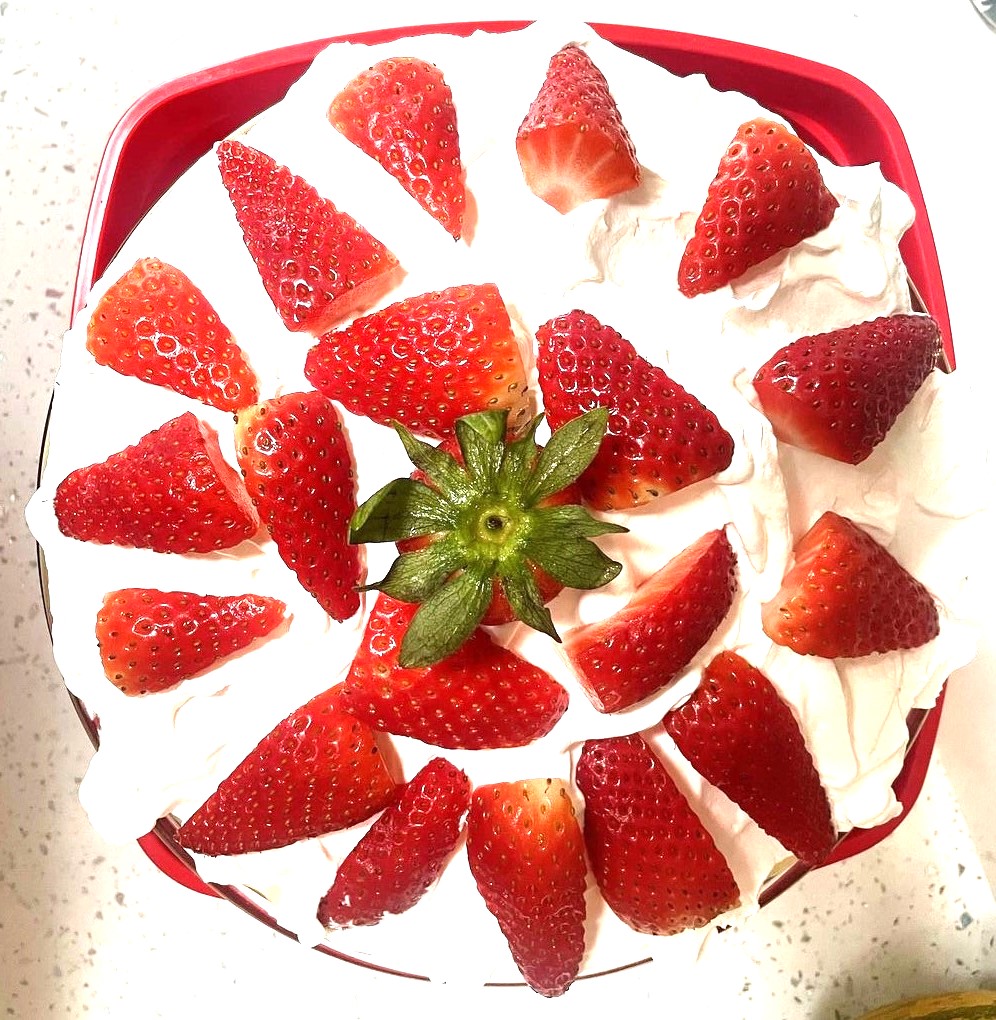
I made a trifle to add to the festive table.  My trifles are quite substantial and threaten to overwhelm my ‘trifle dish’ (a Pyrex bowl!) which is not very large. That doesn’t usually matter as it’s just a short distance from the kitchen to the dining room. However, as it was travelling further afield, I had to balance it on my lap in the dog car. The roads, like most in the UK, are full of pot holes and temporary patches and we have the added pleasure in this area of ‘sleeping policemen’.

The journey was made more interesting by the myriad of traffic lights, which seem to proliferate day by day. Holes are dug, heavy plant and other work vehicles of the ‘Motorway maintenance’ variety are parked near them, and occasionally one or two workmen may be observed, sometimes even doing something down a hole or at the controls of a digger. Usually, nothing is happening, apart from drivers becoming ever more frustrated as access is blocked or diverted and temporary traffic lights impede their progress. I feel very sorry for those who commute to work daily or who drive delivery vans for a living, and I dread to think how emergency vehicles cope.

The custard and cream slid from one side to the other as Barry drove carefully from our house to theirs, applying the brakes many times as he negotiated obstacles. As it was Easter Sunday, there were many cars parked outside friends’ and relatives’ houses, people taking the opportunity to visit and be sociable. This had the effect of narrowing the roads, turning them into a slalom course. It was a stop-start, staccato journey and I feared I would present with a bowl and lapful of trifle by the time we arrived, but managed to avoid that. I have now bought a ‘proper’ footed trifle dish!

We had a lovely day and everybody was suitably exhausted by the end of it.

Barely able to move!

Roxy and Gilbert were flat out for the whole of Monday, and unusually quiet, and so were Susannah and James’s dogs, Arthur and Lottie. 

Half in, half out of bed 

Like young children, dogs love seeing their pals, and having happy new experiences and meeting different people. Roxy basked in the joys of being stroked and talked to and receiving lots of attention without young Gilbert barging in, demanding, ‘Me too, me too’. 

He was busy fetching and playing and his tail wagged non-stop, miraculously without knocking things flying.

 Since he was a very small puppy, Gilbert has liked to lie under my chair and under my legs. He sometimes goes there for reassurance if he thinks he's in trouble. At other times he just wants contact. He doesn't realise he's so much bigger now, and squeezes in so I end up in some very odd contortions. He doesn't usually stay for long, though, and it's very pleasant to feel his warm body next to my feet and legs.


We bought Roxy and Gilbert some toothbrushes recently. 

‘Whimzees’ come in various shapes and sizes from extra small to large. I rather like the alligators and will enjoy seeing the dogs trying them out soon.

Wait!

                                                Look at me!

                                        Good dogs, look at me.

                                                        Gently!

Good girl, Roxy.
Good boy, Gilbert.

Sunday, 31 March 2024

Easter Sunday 2024


Easter Sunday 2024


The clocks went forward at 2:00 a.m.

Fortunately, the schools are on holiday so the children, especially the youngest ones, haven’t got to adjust to earlier mornings. By the time they return to school in just over two weeks’ time, they will be quite used to the ‘new’ time.

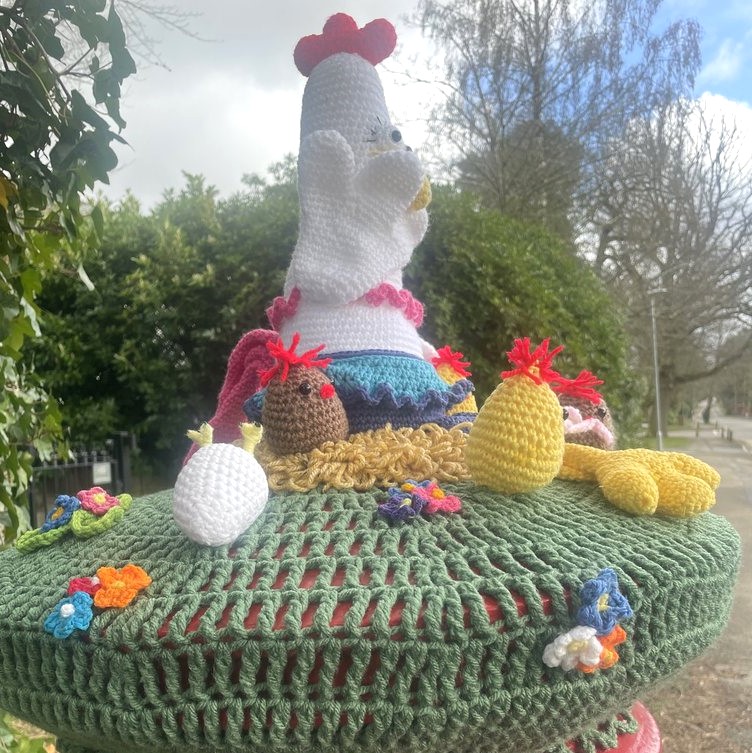
To make their days brighter yet, there is a new post box topper.


Happy Easter, everyone!

Wednesday, 27 March 2024

Easter eggs and rabbits


Easter eggs and rabbits . . . or hares?


Why does Easter fall on a different date every year? Easter is a moveable feast because it is decided by the lunisolar calendar, which aligns the moon’s phases with the sun’s position in the sky. All clear? Jolly good!😉

The date of Easter Sunday is dependent on the first full moon after the spring equinox, which this year, 2024, was on Wednesday 20th March. The first full moon after this date is Monday 25th March and the first Sunday after that is 31st March. 

However, if the first full moon after the vernal equinox were to fall on a Sunday, Easter Sunday would be celebrated on the following Sunday. The Jewish holiday of Passover also follows the lunisolar calendar, but Islam follows a purely lunar calendar, so that holidays like Ramadan occur at different times and seasons of the year.

Eggs are a symbol of renewal and Easter in the Christian church celebrates the resurrection of Christ. That connection is quite clear, but why rabbits? Traditionally, it was hares that were associated with the resurrection, but over time they were displaced by rabbits.

                                                Hare on a mug

When farming was not as intensive and mechanised as it now is, ground nesting birds like lapwings were more common and numerous. When hares seemed to ‘disappear’ into their forms in the fields, people coming upon eggs laid by lapwings and the like, would think the hare had laid the eggs and so the association between hares, later rabbits, and eggs was made.

The brown hare (Lepus europaeus) is one of the largest hares, but it is not native to Britain. Like the rabbit and the edible dormouse (Glis glis) it was introduced by the Romans as a source of food. The Romans ruled Britain for more than 350 years and had a lasting influence on life on this island.

Britain’s only native hare is the Mountain hare (Lepus timidus) which is also known as the blue hare, the white hare and the snow hare, among other names. It has been in existence for at least 130,000 years. The Irish hare (Lepus timidus hibernicus) is a subspecies and is found only in Ireland. It is 30,000 years old.

The Mountain hare is greyish-brown, called blue, and can be seen in Scotland and the North of England. In winter, its coat turns white to allow it to camouflage itself in the snow. It is most noticeable in spring, when any snow may have melted but its coat colour has not reverted. Irish hares do not usually turn white in winter but retain their reddish-brown coats.

Hares are protected under the Wildlife and Countryside Act of 1981.

Hare coursing remains a popular ‘sport’, one for which greyhounds, lurchers and other gaze hounds are used. The Hunting Act of 2004 made it illegal to hunt hares with dogs, followed by the Police Crime Sentencing and Courts Act 2022 making it a criminal offence to use a dog to search for a hare. Police officers can stop and search vehicles if they suspect the act has been breached. 

Hare on the other side of a mug 

It is also illegal to trespass on land with the intention of coursing hares, attend or assist a hare coursing event, or allow your land to be used for hare coursing. Despite all the legislation and the threat of the imposition of fines and prison sentences, illegal hare coursing continues across the country.

There are superstitions attached to hares, as to most living things. The hare is considered a creature of magic and mystery, the Celts associating both it and the rabbit with the full moon, night and the supernatural. It was believed to be a messenger of misfortune. Sailors and fishermen would not mention it by name and would not set sail if they saw one for fear of bad luck, for a hare was thought to cause storms. If a farmer saw a drove of hares in March, he would be sure his farm would not prosper that year. Conversely, others believed they would have good luck if they saw a hare.


                                                Moon gazing hare

William Cowper (1731 – 1880) was an English poet and writer of many hymns for the Church of England. He suffered great depression and many nervous breakdowns, but found solace through adopting three leverets, all males, that he called Puss, Bess and Tiney. His letter to ‘The Gentleman’s Magazine’ in 1784 gives an account of his experience as a keeper of pet hares.