Showing posts with label nuthatch. Show all posts

Monday, 17 April 2023

A to Z challenge 2023 – N is for . . .


A to Z challenge 2023 – N is for . . .

My theme for this challenge is Nature in all much of her wonderful diversity. My posts will reflect the fact that I am resident in the south of England.

All photographs in this post are the property of the writer.

Nasturtium (Tropaeolum)

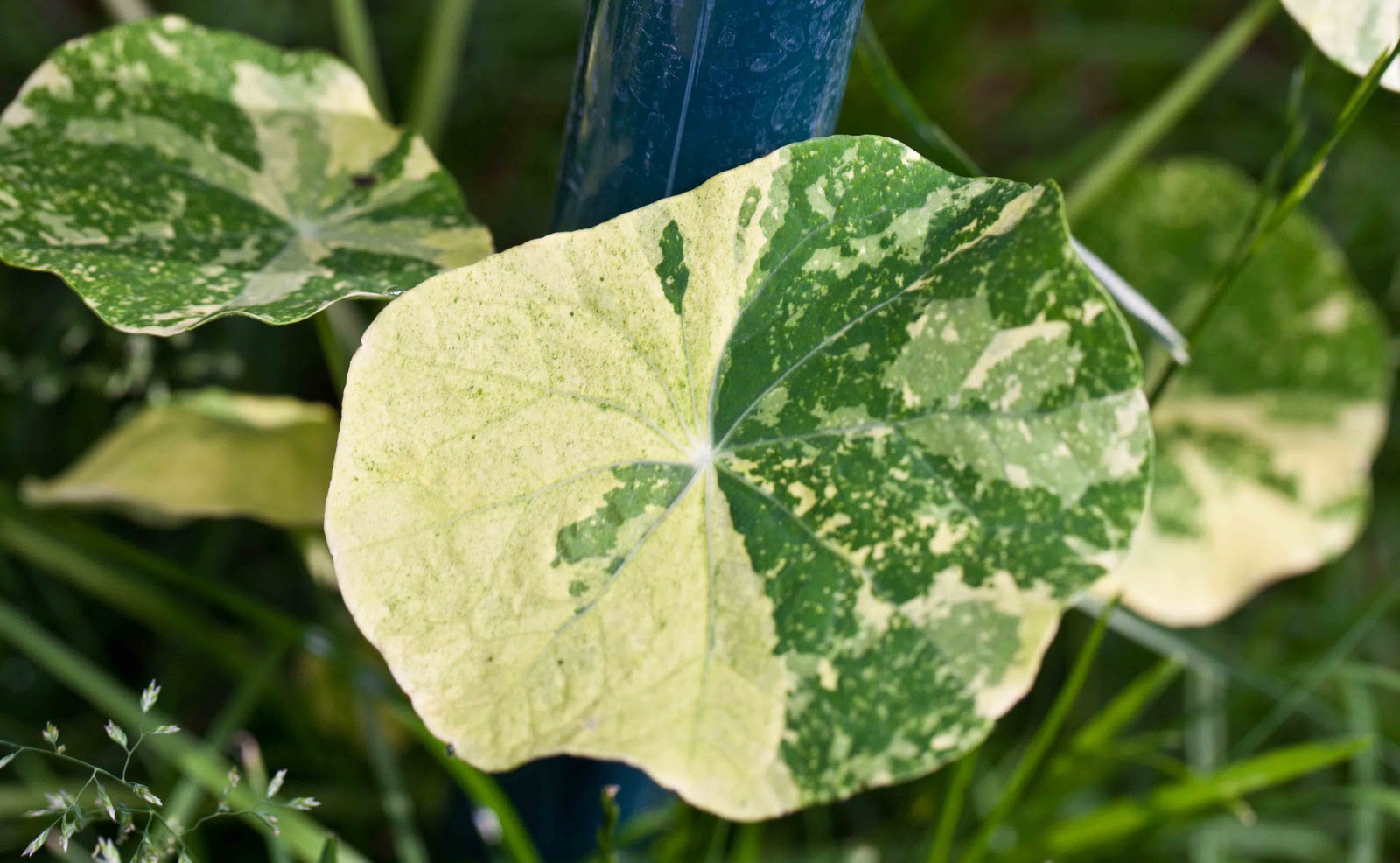
Nasturtiums are easily grown annual flowers in a range of vibrant colours including yellow, crimson and orange as well as various mixtures of these in one bloom. Some are shrubby and others climb or trail and all will grow happily in containers. They can be used as ground cover, though they wander far and wide and can become rather untidy. The leaves may be one colour, or variegated in delightfully mottled patterns.

All parts of the plant are edible and they make a colourful addition to salads and cakes, along with marigolds and pansies. The seeds can be pickled and are known as ‘poor man’s capers’. They are quite peppery!

With visiting bee

They are often grown as companion or sacrificial plants in the vegetable bed, attracting caterpillars and blackfly. If covered in blackfly they will not be suitable for human consumption!

They must have sun for at least half the day and do not grow well in shade. They flower for several months, between the last and first frosts and grow best in poor, well-drained soil. They don’t require feeding unless you want a crop of healthy leaves and very few flowers.

I’m not quite sure how poor soil will be good for both nasturtiums and vegetables!


Nigella damascena

Nigella damascene is another pretty annual that is easy to grow. It is a member of the buttercup family and is commonly known as love-in-a-mist or Jack in the green. It has attractive feathery leaves and single or double blooms of pink, blue, violet or white which are followed by distinctive globular seed heads. The pods are often used in flower displays but if left on the plant, will disperse seeds freely.

It prefers to grow in sheltered full sun on well-drained soil and gives a profusion of flowers from July to September. It dislikes heavy, boggy soil and will not flower well in shade.  

The ‘damascena’ in the flower’s name refers to the city of Damascus, where it is said that it was found during the Crusades in 1570 by a French knight called Robert de Brie (was he a big cheese?)

When he returned to his castle in Champagne (brie is the best cheese to accompany dry champagne!) de Brie planted the first ever nigella in France. 

Some 400 years earlier, another crusader, Frederick Barbarossa, Emperor Frederick I, was reputedly seduced by a green-haired water sprite and, pursuing her, drowned. The lady-in-the-shade, another name for nigella damascena, sprang up alongside the stream as a perpetual (or annual, at least) reminder of the fairy’s charms, the feathery leaves a token of her tresses.

Frederic I did indeed drown while crossing the River Saleph, but no accounts of his death mention a naiad!


Nuthatch (Sitta Europaea)


The nuthatch is a native British bird, common throughout England, Wales and southern Scotland. They inhabit broad-leaved woodland and do not stray far from where they hatched. They visit gardens close to suitable breeding grounds in deciduous or mixed woodland, particularly in November, when they are busy searching for food and also caching it in the shorter daylight hours.

Nuthatches are omnivorous, their diet including invertebrates, nuts and seeds. If you are lucky enough to have them visiting your garden, they can often be seen scuttling up and down tree trunks and along branches searching for insects hiding under the bark.

The name nuthatch comes from Middle English ‘nuthak’, meaning nut hacker. This refers to their habit of wedging nuts into crevices and smashing them open with their strong beaks.


Monday, 21 May 2012

Feed me!


Feed me!

May brings an explosion in the garden. Everything burgeons and each day offers fresh delights. The month becomes increasingly noisy as young birds demand that their parents feed them. The parents are on the go from just before break of day until the last vestiges of light have left the sky - they are being worn ragged by their demanding offspring. Feeding several bottomless pits is exhausting and some of the adults are beginning to look rather unkempt, their usually pin neat plumage dishevelled. There is little time to preen when there are so many mouths to feed.
It was flirting my tail like this that got me into trouble in the first place.
Me too!
I'm exhausted - no time some days even to  run a comb through my feathers . . .

. . . but at least my babies say 'Please' and 'Thank you', unlike those rude starling youngsters.
Feed me!
FEED me!!
FEED ME!!!
Say Please . . .
Feed me PLEASE - I'm starving. I'm a starving starling . . .
That's better, dear - now don't gobble.

We have seen blackbirds, goldfinches, nuthatches, coal tits, magpies, blue tits, great tits, greater spotted woodpeckers, wood pigeons, robins and a chaffinch at the feeders.  It’s very unusual to see a chaffinch – they prefer to feed on the ground. The long-tailed tits are noticeable by their absence – no doubt they’ll be along later for they must have young too. The jackdaws have been back to take food from the bird table and the local crows are vigilant and noisy when a red kite soars above their nests, looking for an easy meal.
My youngsters are hungry, too . . .
 . . . and mine  . . .
. . . mine, too . . .
Look right.
Look left.
All clear? Tuck in.
I wait till it's quiet.
Our most conspicuous visitors are the starlings. A few days ago we saw only three or four young birds but in the last couple of days the numbers have proliferated. Yesterday Barry counted forty starlings perched on the arches. They chatter and shriek from early morning until dusk. They enjoy communal feeding on the pergolas and communal bathing in the pond. Watching the harassed adults it’s difficult to ascertain whether the parents feeds their own young or whether they respond to all gaping beaks – I suspect the latter. 
Wood pigeons need food, too. Some chance with all those starlings.
I watched the plump, cheeky starling babies as they alternately preened vigorously and called vociferously. One of them was paying more attention to his plumage than his safety. Good grooming is essential for a bird but he wasn’t looking about as frequently as he should, as, indeed, the adults do. I feared for his welfare. I knew a sparrowhawk would appear on the scene sooner or later and today was the day. He swooped down from the roof and carried off a screaming youngster. Barry was startled when he walked along the garden path a few minutes later to see the sparrowhawk on the ground preparing his feast. We may deplore the depredations of the sparrowhawks but they have young to feed, too.
                         A few soft feathers are all that's left to commemorate a brief existence.


Tuesday, 18 October 2011

ABC Wednesday N is for . . .

Nasturtiums (Tropaeolum majus) are still flowering vibrantly in the garden though not for much longer.  As the days grow colder and the nights colder still we shall soon have the first frosts to stop these pretty annuals in their tracks. They have clambered and scrambled and climbed through other plants and opened their colourful blooms to the insect population for several months. Often the undersides of their leaves are populated with aphids which means that the rest of the garden may escape infestation.
Nasturtiums’ needs are minimal – earth and water and sun. If they are looked after too well they will produce huge leaves and fewer flowers. As well as looking cheerful and brightening the sometimes dull, damp days of a British summer, all parts of this member of the cabbage family (Brassicaceae) are edible. 

I have only ever used them in salads and pickled the seeds as Poor Man’s Capers but there are some interesting recipes here. The following video clip is interesting, too.

The leaves are as pretty as the flowers and may be plain or variegated.
Nemesia is a fragrant, pretty flower that is usually treated as an annual though sometimes ours have survived for two or three years. They rapidly fill a tub or trough with masses of flowers, the perfume wafting on warm summer air to delight someone walking in the garden or standing at an open door or window. They bloom from June to October.
Nepeta cataria, often called catmint or catnip, is a rather straggly plant with furry leaves and spikes of white and blue-purple flowers. It attracts bees and butterflies as well as cats. Winston, however, is unimpressed by it, whether growing or dried!

Catmint can be used as a herbal medicine to relieve colic in children, as an antipyretic in cough mixtures and to treat haemorrhoids. It is believed to deter rats – it should be tied in bunches and hung in places where they are not wanted. As rats are generally not welcome anywhere I wonder if there is enough catmint in the world to carry out this job!
Preying on sticklebacks!
There are common or smooth newts (Lissotriton vulgaris) in our pond. 

We rarely see them but occasionally have watched them stalking small sticklebacks. I have written about them here.
The annual Nigella damascena, often called love-in-a-mist, has been grown since Elizabethan times and is an old cottage garden favourite. It is a member of the buttercup family (Ranunculaceae) The flowers are attractive at all stages. The spherical buds open to delicate flowers commonly in a range of blues, though they may also be white or pink.

After flowering the balloon-like seed heads can be used in dried flower arrangements. Left in situ they will eventually disperse their seeds thus ensuring a pretty show the following year. The ‘mist’ of the common name is created by the delicate greenery surrounding each flower – from a distance the flowers appear to be surrounded by a green haze. 

Some gardeners call this flower ‘Devil-in-the-bush’ – and maybe it is a nuisance if it grows where it’s not been invited. Not for me, though – anything that succeeds in growing in our garden is welcome – well, nearly anything.
Night-scented stock (Matthiola longipetala) has not grown well in our garden. I have just discovered that it prefers a light soil and ours is heavy with some clay. It’s a shame because it has a lovely scent, particularly noticeable in the evening.
Nuthatches (Sitta europaea) can often be seen walking headfirst down tree trunks. They look rather like small woodpeckers and are welcome visitors to our garden feeders. They eat a varied diet of insects, seeds and nuts and may live for eleven years – quite a long span for a small bird, about the size of a Great Tit.
Ripening hazel nuts in June

Finally, Nuthatches may care to feed on the Nuts from our corkscrew hazel, though I think the squirrels are probably the prime recipients of this year’s bounteous harvest.

Click here for more Ns.

Saturday, 6 February 2010

Camera Critters #96 Nuthatch and Blue Tit

As Spring approaches the daylight hours are lengthening and the birds are wearing brighter plumage. They are much in evidence in the garden, feeding, preening, bathing, squabbling.
The other day a Nuthatch came obligingly close and posed prettily for Barry to take photographs.
This image is not quite sharp enough but you can see the Nuthatch's long tongue. I don't know what it was capturing - very small insects perhaps, though it was a very cold day when most self-respecting insects are tucked up somewhere warm - probably in our house!

This is no insect! It looks like a berry, but our holly had no berries this year and there are none on the ivy - wrong colour anyway, for either of those. Maybe it's a larva of some sort, but spherical??

Pause for thought . . .


This is how we typically see them, parading down a tree trunk. 
Then another joined it - its mate, perhaps, but he couldn't capture them in one shot. They departed and a Blue Tit flew in.

Thank you to Misty Dawn for organising and hosting this meme. To see more Critters please click here