A to Z challenge 2023 – C is for . . .
My
theme for this challenge is Nature in all much of her wonderful
diversity. My posts will reflect the fact that I am resident in the south of
England.
All
photographs in this post are the property of the writer.
Spiders
used to make me shudder, but photographing them has highlighted details not
easily seen by the naked eye. However, I would still rather they disported
themselves outside the house. Money spiders I have never minded and little Crab
spiders are most interesting.
Crab
spiders (Thomisidae)
There are around 2100 Thomisidae spider species across the
world and 27 of them can be found in the UK, in the south of England. Unsurprisingly,
they somewhat resemble crabs and scuttle crab-wise sideways.
Flower crab spider (Misumena vatia)
They are often called
flower crab spiders, as that is where they frequently can be found, waiting
patiently for their prey, which they will trap with their long, strong front
legs, after paralysing them with their toxic bite. They catch mosquitoes, sawflies
and butterflies among other insects, but their main diet consists of ants,
small caterpillars and moths, and occasionally, houseflies, grasshoppers and
aphids.
Although they feed mostly during the day, they are able to
hunt at dusk because of their excellent eyesight. They have six eyes, two large
and four smaller.
Some of them can change colour, though it may take a couple of
days for them to take on the colour or markings of the flower in which they
lurk. As with many spiders, the female may eat the male, either before the male
approaches to mate, or after mating. The wisest males approach cautiously and
depart quickly.
They are not large spiders, their overall length being about
10mm, and can be seen between April and September, usually on white or yellow
flowers.
Candy
stripe spider (Enoplognatha ovata)
The Candy
stripe spider is even smaller than the Crab spider, about 6mm long. It is very
common throughout the British Isles, and is active from May to October and
despite its small size, preys on insects many times larger than itself. ‘Redimita’ has two dorsal red stripes The Candy
stripe spider is a comb-footed spider. Comb-footed spiders are also known as
cobweb spiders or tangle-web spiders. There are more than 2000 species and they
are known as haphazard web-builders because they spin irregular webs. They
possess a row of comb-like bristles on their hind legs which they use to throw
silk to trap prey.
After
mating in July, the males soon die and the pregnant females build dens by
rolling leaves of bramble or nettle. In this the female deposits a blue egg sac
and guards it. As August comes to an end and throughout September, emaciated
females leave their dens to die, just as the young spiderlings emerge from the
egg sac. They stay within the leaf den before travelling down to groundcover at
grass roots level where they overwinter. From April to June they move higher up
the plants, ready to mate in July.
‘Lineata’ is yellow or cream, though this one looks more greyish-white!
It’s a
short life and a merry one!
My next C
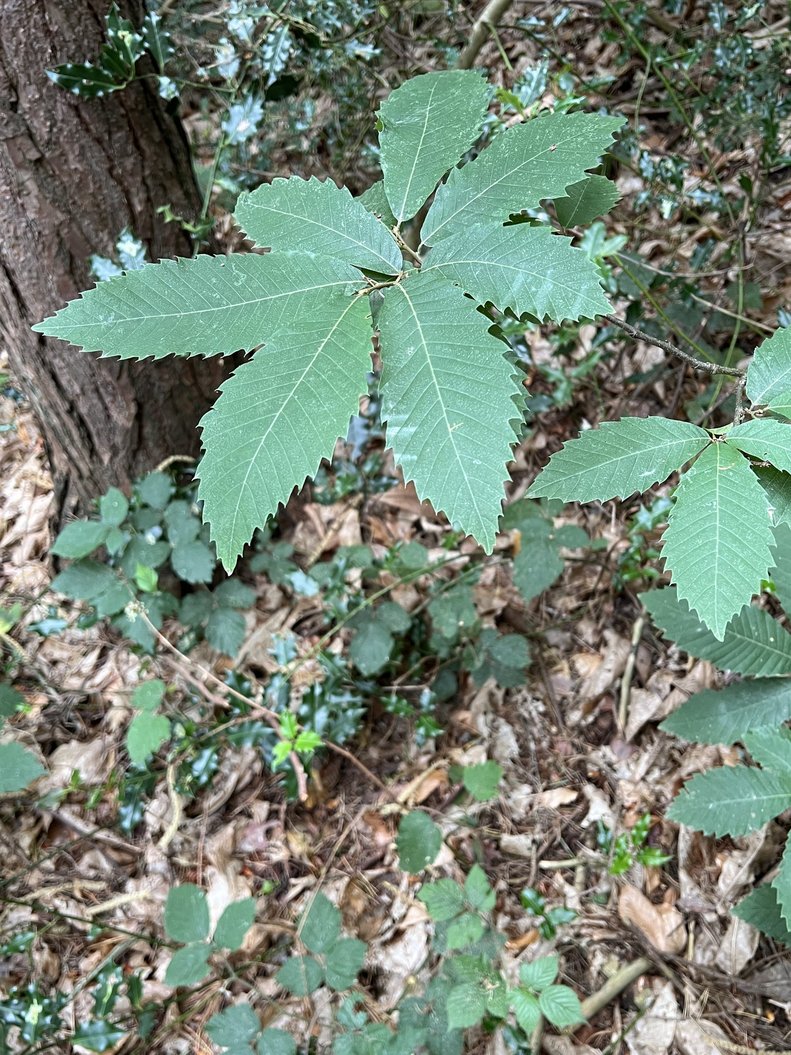
is Castanea sativa, the Sweet or Spanish chestnut
This is a
majestic deciduous tree. With an eventual height of 35 m, and a girth of 2m, it
can live for 700 years.
It
belongs in the same family, Fagaceae as
oaks and beeches.
Young
trees have smooth greyish bark but as they age they develop fissures which
spiral upwards around the trunk.
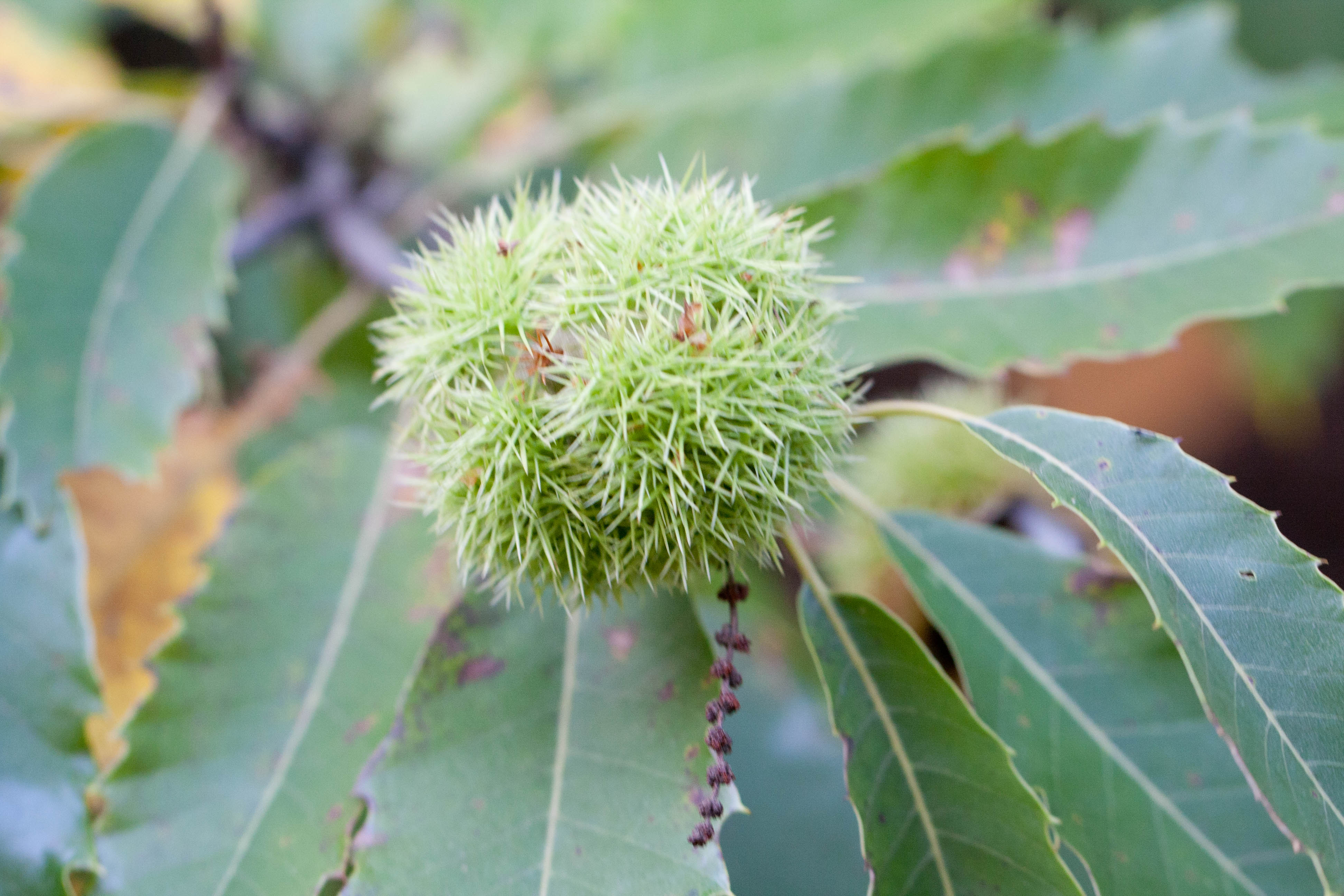
The dried remnants of the catkin hang below the prickly coat of the chestnut.
When they
are about 25 years old they begin to produce fruit. The sweet chestnut tree is
monoecious – that is, it bears both male and female flowers on the same tree.
The long catkins are pollinated by insects and the female flowers develop
green, spiky cases which contain and protect the developing shiny brown, soft nut.
In late
summer and early autumn the woodland floor is littered with the ripe nuts,
mostly all still within their cases, and the woods are busy with individuals
and families collecting them.
Gloves are recommended for the task of removing nuts from their cases, as the spikes are sharp and piercing!
The nuts can be roasted or boiled and can be used in
many different ways to complement other dishes. Commonly, Brussels sprouts are combined
with chestnuts to make a tasty accompaniment to game or poultry.
The dried
cases remain on the ground and can hurt tender paws, which makes dog walking in
the woods more exciting than is customary.
My final C is for cygnets.
Cygnets of the Mute Swan (Cygnus Olor)
The Mute swan is the British Isles’ largest and heaviest water bird. It has been part of wildlife in the UK for over 10,000 years and thus is defined as a native species.
It breeds across most of the UK, apart from the north of Scotland, mid-Wales and the moors of the south-west of England. Although it does not migrate, it may move around the country in winter in search of better feeding grounds.
Mute swans have orange billsThe young of swans are called Cygnets or swanlings. Cygnet derives from the Old French ‘cigne’ meaning swan, and originally from Latin ‘cygnus’. There may be as many as 12 cygnets in a clutch but some will be lost to predation. Sometimes a complete clutch is lost and at other times an entire clutch will survive. Cygnets may be seen at any time between May to July on bodies of water as diverse as village ponds, rivers and estuaries.
Both parents care for their young
Very young cygnets sometimes ride on their parents’ backs where they are safe from predation. Newly-hatched cygnets often fall victim to crows, herons, magpies and pike. On land they are, like the adults, prey to foxes and mink.
Mute swan cygnets are usually a dull brown above and white below though occasionally a cygnet will be all white. Such cygnets are known as ‘Polish swans’.
Cygnets remain with their parents for about 6 months, but once their plumage has changed to become predominantly white, during late autumn or winter, they are driven off to become independent. They join the first flock of swans they meet and stay with them until they are old enough to breed, when they are about four.